Fictional Simplicity

I would love to conduct a scientific experiment in which one version of my brain read contemporary fiction while another read an old classic, a Jane Austen novel for example, and I could sit back and compare their experiences.

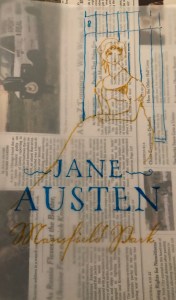
I’m about halfway through Gary Shteyngart’s fantastically funny beautifully written new novel, Our Country Friends. It is entertaining and theoretically immersive and yet I can’t seem to read more than a chapter or two without drifting…(did I pay my credit card bill? I forgot to sign my kid’s sports consent form! Is it cold in here?). Not that this isn’t a fairly common experience in my life, but here’s the strange thing: Last month I re-read Mansfield Park and I sunk into it like a warm bath and came out only when I was relaxed and slightly shriveled.

So I’m wondering if there is a connection. Not in the prose so much as the world it portrays. Shteyngart’s novel is literally of the moment, full of phones, Covid, helicopter parenting and ambitious neurotic people. In Austen, a long walk could be the highlight of the day. News arrives so sporadically that each new snippet can be chewed over for days before the next one arrives.

Think of all the things we need to remember today: Passwords, who to call when the heat doesn’t work. Is it oil? Propane? How to unclog a drain, pay bills, pay taxes. Directions to the dentist, all the various doctor appointments and what your health care plan will cover. Which former republic is Russia planning to invade? What horrible things are the Chinese government doing now, without repercussions? That’s without touching on the latest music, movies, tv shows and whether or not I even subscribe to the service which will allow me to watch them.

Maybe it’s age catching up with me, this desire to downscale the input. My brain is fed up and its way of telling me is to cut me off after a chapter of the latest fiction. It’s telling me that I really should be living in a time when I could spend an entire morning hand-washing the underwear I’ve probably been wearing for days at a time. Gross? Yes. But so much less stressful!
Santa Claus and the Internet

When my kids were little, I was self-endowed with great amounts of the sort of wisdom one has when one has never been a parent. I knew exactly how I wanted to raise them, how I mould out of their open and trusting characters thoughtful, creative people who pursued their own goals but did so out of self-knowledge and a sense of justice and fairness. Now they are teenagers and they are really good kids but I still can’t avoid questions about our choices and whether I would do things differently.

Clearly this is somewhat of an obsession; the novel I just finished has this as a central question. How to raise kids when the internet has their own ideas about who they should be?

I wanted my kids to have a childhood, one where they got muddy and collected bugs and created fairy houses out of sticks and moss and acorns. They read books and drew, painted, sewed, knitted and seemed altogether happy. Then they found out about the internet. And they were pissed.

We were able to keep it from them (as if it was a dirty secret)only by sending them to a Waldorf school, and even then apple products oozed in through cracks in the rough-hewn walls. By seventh grade, iPhones were like sex — some kids had them, those without felt cheated; everyone was categorized by whether or not they’d lost their “innocence.”

My kids got phones in high school, which is pretty late by most standards. I don’t understand why anyone would need (as opposed to want) them earlier, but that’s me. They were thrilled of course, but underneath their liberation there was — and continues to be — a sense of righteous fury: All these funny cats and people failing were here all along and you kept them from us! It’s eerily similar to the way my son in particular feels (rightly so!) about Santa Claus, as fraud perpetuated on him for years.

I have second thoughts about the Santa Claus decision; if I could go back we’d probably celebrate Solstice instead and swear them to secrecy around their classmates, but exposure to the internet brings up even more fraught emotions. Not only are they let loose online, but it’s with a complete understanding of my feelings about it’s many problems (yes yes, there is much good there but teenagers do not tend to gravitate to the more enlightening aspects of the online world), which makes their phones a tool of rebellion.

Maybe if I’d just gotten over myself and let them have phones earlier, they could have had a healthier relationship with technology. I have few doubts that it will all settle down — my son will start reading again, my daughter might one day compare what I say to what an influencer says and favor my perspective — but was it worth it for them to have that real world tactile childhood? I do think so, but what do I know?

Lit Meds

Over the past year I’ve wavered between relief and a sense of survivor’s guilt that COVID has not wreaked havoc in my life. Of course it’s been wrenching to read about so much death and illness and general suffering, but other than my kids being cranky and a bit gloomy and taking over the kitchen like marauding colonizers, everything has been okay. At least I thought.

Then I took a closer look at the books I’ve been reading. I’ve always been a fairly instinctual reader. I drift towards what feels right at the time (unless I’m swept up in the hype over a new book, something I try hard to avoid). Apparently what feels right at this time has been a stack of soothing philosophical books and appreciations of nature and the simple life.

All have been great reads — each snuck up on me with its own slice of wisdom or guidance or appropriate escapism. Here are a few samples:

“Maybe this was what I should have said to the boys: How do you find your own way of looking at things? How do you take off your socially preapproved glasses, so that in every glance at the world around you, you feel a part of the world around you, even saved by your sense of belonging in it — a belonging rooted not in your wearing the same glasses as everyone else, but precisely in having taken them off, in feeling your common solitariness with everyone?” 

“What I want us to protect isn’t just the distinctive range of consciousness within each of us but also the ability to share that distinctiveness with each other. That’s the only way I’ve found to feel less alone. That’s the deepest way to look at the stars together. To recognize how fundamentally alone each of us is, locked in a separate body and a separate mind, and in that recognition to have the chance to feel all that reaches across that space between us, all the earth-deep connections that are real.” 

“Watching the flock has brought  home to me how easy it is to react to the idea of masses of refugees with the same visceral apprehension with which we greet a cloud of moving starlings or tumbling geese, to view it as a singular entity, strange and uncontrollable and chaotic. But the crowds coming over the border are people just like us. Perhaps too much like us. We do not want to imagine what it would be to have our familiar places reduced to ruins. In the face of fear, we are all starlings, a group, a flock, made of a million souls seeking safety.” 

“I’ve valued deer for their capacity to surprise and delight me, which is why I’ve resisted learning more about them. The more you know about something, the less it can surprise you. But it’s hard to feel sympathy with a thing whose reality you have chosen to ignore, which makes my attitude not so different from those who would write approvingly of the physics of a dying deer, or how the best thing about a deer collision is how funny it can be.” 

“Science showed him how to see the Cosmos in a grain of sand or the ocean in a woodland pond, a mountain range in Fairhaven Cliff, a glacier in the cobblestones of Walden Pond. Poetry gave him a voice to show the world why this mattered.”

“It takes a man of genius to travel in his own country — in his native village.”

“Hence, emancipation must begin with self-examination: ‘What a man thinks of himself, that it is which determines, or rather indicates, his fate.’ Or, as Saint Augustine wrote in his Confessions: ‘I was held back not be the fetters put on me by someone else, but by the iron bondage of my own will.'”

Information Glut

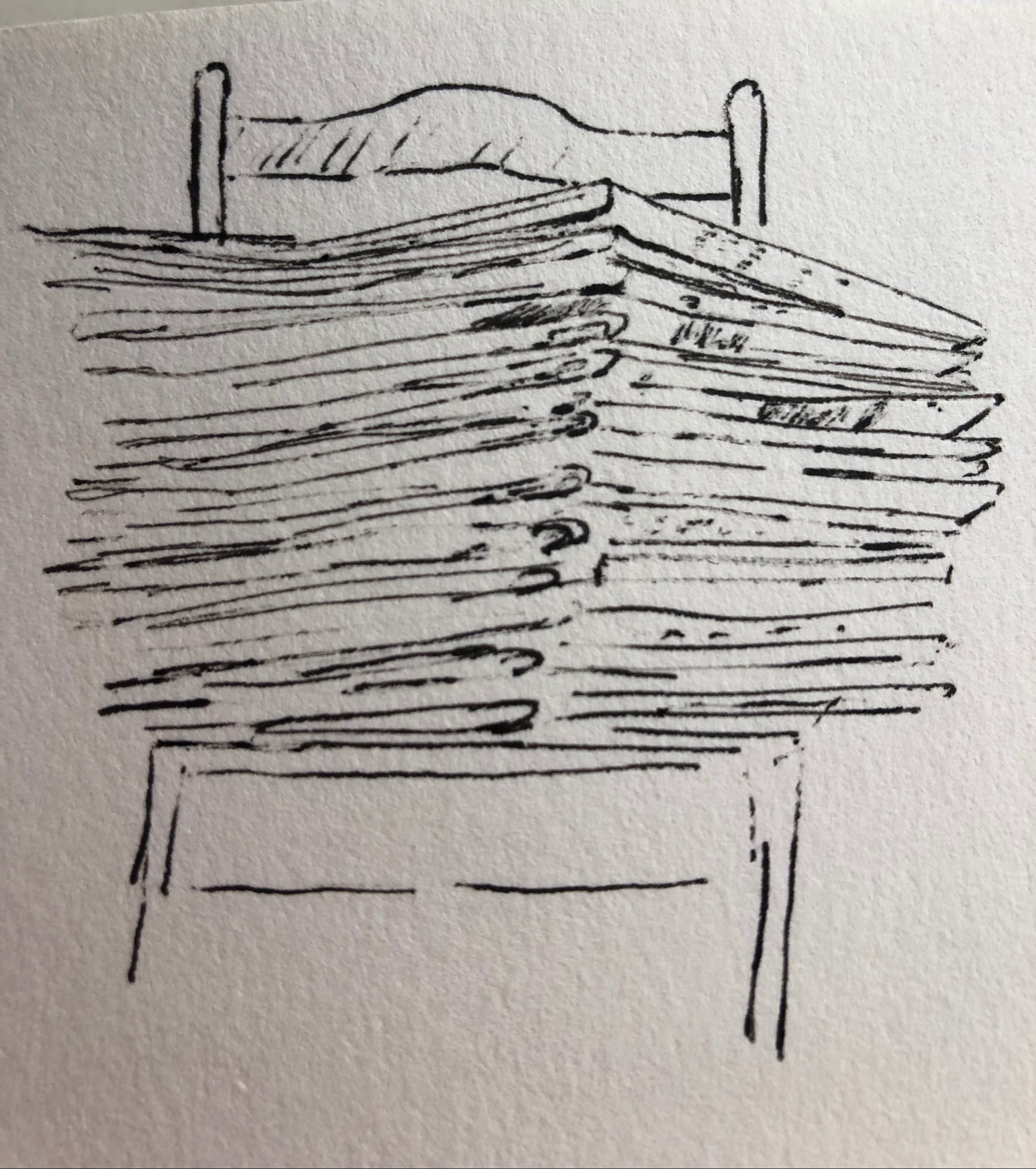
image_571255852034517I grew up in a beautiful house furnished by books and stacks and stacks and stacks…of periodicals. Newspapers, magazines, brochures and catalogues were stacked on chairs and tables. This was the decor of my mom, an information hoarder who could not stand to let a single article in The Minneapolis Star Tribune, The New York Times, Time, Newsweek, The New Yorker, The Economist…go unread.

I loved this in her, even as the clutter drove me crazy and I vowed my house would be free of any pile thicker then at the width of my hand.

Then came the internet. And Evernote. I am a compulsive clipper. I have digital notebooks which, if converted, could paper the chairs of a giant suburban neighborhood.

Why? What am I going to do with this information? Read it? I am convinced there’s a hole in my brain through which 90% of what I read passes within ten minutes. Still, I persist. I suppose some inherited traits are unexpected.