Nature Fantasy vs Documentary

Some people fantasize about a glamorous life in a penthouse apartment; others imagine a sprawling beach house. I have always had a dream of moving my family from our house in the country to a treehouse in the deep deep woods, far from pavement and internet, where we live off our wits and…well, the details are fuzzy.

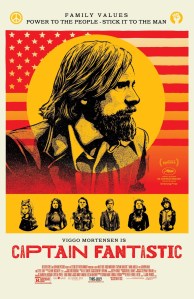
I am absolutely one hundred percent alone among my family members in having this fantasy, so I am forced to live it out through books and movies. A few years ago, I was beside myself to hear about Captain Fantastic, which (other than the mother being dead) was pretty much exactly what I wanted: A close family, intimacy with nature and surviving on what they could harvest, grow, trap, kill. Plus, they were schooled in classic education. Plus…well…Viggo Mortensen. Once they were forced to go to the city, they pretty much lost me, but I dined out for months on the first half of the movie.
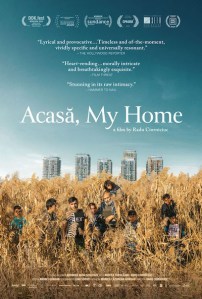
Then last weekend, we stumbled across a new documentary, Acasa, My Home, which is basically a real-life Captain Fantastic set in Romania. Though without classic education or Viggo Mortensen. A large family lives in a nature park adjacent to Bucharest, fishing and raising chickens and pigs and harvesting what they can. They were happy, but it was also not easy. They too were forced into the city, and it did not go smoothly, at least for the parents. Even the kids wanted to go back to their old home, but were not allowed for many reasons, primarily lack of education and the hygienic shortfalls of their wild life (in which they literally shared their beds with birds and pigs). Even though I rooted against the authorities, I did so knowing they were pretty much right in forcing them out of the park.

Since there was never a chance of relocating to a remote mountain top or Scottish Highland, it’s not as if my bubble was completely burst. And yet it dampen my fantasy life a bit. Documentaries can be dangerous in that way. Sometimes you just want to believe the Hollywood version.

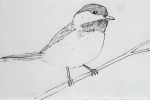
Birds on the Brain

Yesterday I sat for a good half hour on the ground underneath a bluebird which was conversing deeply with another bluebird some distance away. I had no idea what it was saying (hopefully “Let’s move into one of the birdhouses the humans put up last weekend”). It was one of the best parts of my day.

Since Covid, bird watching has become a “thing.” At my local bookstore, recent releases about bird behavior (David Allen Sibley’s What It’s Like to Be a Bird; The Bird Way, by Jennifer Ackerman) were backordered for weeks. Apparently podcasters stalked Jenny Odell, author of the altogether fantastic How to Be Alone, which is filled with her bird obsessions because my feed was filled with interviews with her.

I say this not out of complaint but a certain camaraderie. My bird obsession started a few years ago, but before I moved to the country I tended to put birds into categories such as “brown bird” or “duck.” In New York City, a nesting pair of red-tailed hawks held the city in thrall; now I regularly wave red-tailed hawks way from our chickens.

We’ve set up bird feeders around our house, with the result that our place is teeming with different species. This time of year the chickadees, nuthatches, titmouse and cardinals are joined by red-winged blackbirds, Carolina wrens, finches and sparrows galore. Sometimes I will sit and watch them interact, anthropomorphizing them to a degree which would make scientists roll their eyes. The bully bluejays, delicate titmouse, low-profile juncos. I could write the avian version of a high school drama series.

The thing is, they are amazing. Crows recognize individual humans and if you piss them off (bother one or cause them some harm), they might attack you; on the other hand, leave them presents and they might reward you with a gift. Birds’ migration paths follow the Earth’s magnetic field, something humans cannot even detect.

We could all do worse than develop an obsession. As I write this, two finches are at my feeder taking turns feeding each other while a red-bellied woodpecker is at the other feed methodically spilling sunflower seeds on the ground and two female cardinals are bickering. It is, at the very least, an excellent procrastination device.

The Writer and Her/His Thoughts

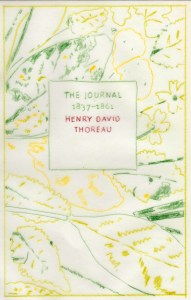
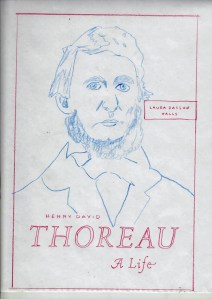
For the last several months, I’ve been doing a deep dive into Thoreau, alternating the Journal with Laura Dassow’s excellent biography. It’s a hefty project, since both are fat books, and now, nearly finished, I might be nothing close to a Thoreau scholar, but I know the man as more than a guy who lived by a pond for awhile.

I am only slightly embarrassed to admit that while baking in Thoreau’s ideas and hijinks (he climbed a tree and caught an owl in his bare hands — and later released it; in order to understand geese better he would sometimes flap his arms and honk like them), I frequently irritated my family with stories (“Did you know that Thoreau’s home was a stop on the Underground Railroad? That he was one of the first and most vocal supporters of John Brown?). My daughter would groan and say “Thoreau — again?” though she’d pronounce it “throw” as if she wanted to throw me across the room.

Reading them both together — I would focus on several years of the journal followed by the corresponding chapter of the biography — has given me an even deeper appreciation of how humble the guy was. His neighbors bemoaned his lack of ambition (one made fun of him for standing by a pond for hours observing frogs), they failed to notice that he was also lecturing, building houses, making crucial observations about levels of the river and its flow, surveying property and, oh yes, writing several books and magazine articles. He did all those things yet there was little mention in his diary, which instead was filled with pages and pages of birds and frogs and meticulous descriptions of plants, all of which sounds very boring, but absolutely was not, as he tied all that observation into the relationship between man and the natural world and to what it means to live a good life.

In my twenties I once tried to tackle John Cheever’s short stories alongside his journals. I was far too young and narcissistic to understand the struggles of an older man. Now might be the time to go back to it, though my interests have changed and I’m more attuned to the world of a nineteenth century nature lover than a twentieth century suburban writer, no matter how brilliant his stories.

Still, I might give it a shot. Along with Dawn Powell, Katherine Mansfield, Virginia Woolf….a new reading project.

Forever Young

A year into my self-directed immersion course on Thoreau, I still find, almost daily, some observation or thought that resonates. Many I wish I’d read (and actually heeded — two different things) in my twenties. Like all of us, he is trying to find out how to be in the world. He points out that the “real jobs” held by neighbors would drive him bananas, and despite days filled with hard work and observation he is constantly fighting off accusations (often from friends like Emerson) that he is lazy. Take it from me, lying on the couch on a sunny cold afternoon, he was nothing close to lazy.

He worked in the pencil factory, he helped neighbors raise houses, he kept this incredibly meticulous journal filled with scientific observations, he wrote many books, he lectured on many things, including abolition, his house was a stop on the Underground Railroad. And, one of my favorite things about him, he played. Constantly. In some ways like a kid. He would ice skate for hours at a time, he climbed trees (well into his 30s). In one tree, he caught an owl in his bare hands (and later let it go), he found dragged snapping turtles home (at great risk to his fingers and toes) to observe them and dug up turtle eggs then buried them outside his house so he would watch them hatch.

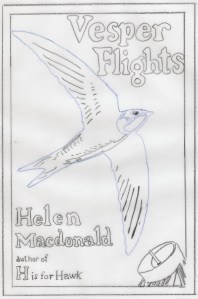
Having read a number of books written by great observers of the natural world, I’ve noticed many have this sense of almost childlike wonder and adventure in common. In Vesper Flights, Helen MacDonald finds meaning in birds and trees and takes cues from the natural world on how to live. she talks about hunting for mushrooms:

“Searching for chanterelles, I’ve found myself unconsciously walking on tiptoe across mossy stumps, as if they might hear me coming. It doesn’t work well if you walk around and try to spot them directly. They have an uncanny ability to hide from the searching eye. Instead, you have to alter the way you regard the ground around you, concern yourself with the strange phenomenology of leaf litter and try to give equal attention to all colors, shapes and angles on the messy forest floor.” 

Vesper Flights

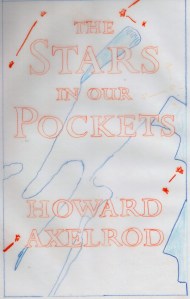
In his book, The Stars in Our Pockets, Howard Axelrod says, “Attention span isn’t a matter of willpower, or even necessarily of intellect. Attention span comes from curiosity” and goes on to praise the sort of curiosity that “carries you branch to branch.”

I don’t know why it surprised me so much to think about Thoreau climbing trees or skating on the frozen rivers. Maybe I think of him, and everyone from that time period, as sort of old and fusty and missing a sense of whimsy. So it’s strange to think that this is something he could actually teach those of us who are too preoccupied to find some joy in shimmying up a tree and observing a turtle.

Lit Meds

Over the past year I’ve wavered between relief and a sense of survivor’s guilt that COVID has not wreaked havoc in my life. Of course it’s been wrenching to read about so much death and illness and general suffering, but other than my kids being cranky and a bit gloomy and taking over the kitchen like marauding colonizers, everything has been okay. At least I thought.

Then I took a closer look at the books I’ve been reading. I’ve always been a fairly instinctual reader. I drift towards what feels right at the time (unless I’m swept up in the hype over a new book, something I try hard to avoid). Apparently what feels right at this time has been a stack of soothing philosophical books and appreciations of nature and the simple life.

All have been great reads — each snuck up on me with its own slice of wisdom or guidance or appropriate escapism. Here are a few samples:

“Maybe this was what I should have said to the boys: How do you find your own way of looking at things? How do you take off your socially preapproved glasses, so that in every glance at the world around you, you feel a part of the world around you, even saved by your sense of belonging in it — a belonging rooted not in your wearing the same glasses as everyone else, but precisely in having taken them off, in feeling your common solitariness with everyone?” 

“What I want us to protect isn’t just the distinctive range of consciousness within each of us but also the ability to share that distinctiveness with each other. That’s the only way I’ve found to feel less alone. That’s the deepest way to look at the stars together. To recognize how fundamentally alone each of us is, locked in a separate body and a separate mind, and in that recognition to have the chance to feel all that reaches across that space between us, all the earth-deep connections that are real.” 

“Watching the flock has brought  home to me how easy it is to react to the idea of masses of refugees with the same visceral apprehension with which we greet a cloud of moving starlings or tumbling geese, to view it as a singular entity, strange and uncontrollable and chaotic. But the crowds coming over the border are people just like us. Perhaps too much like us. We do not want to imagine what it would be to have our familiar places reduced to ruins. In the face of fear, we are all starlings, a group, a flock, made of a million souls seeking safety.” 

“I’ve valued deer for their capacity to surprise and delight me, which is why I’ve resisted learning more about them. The more you know about something, the less it can surprise you. But it’s hard to feel sympathy with a thing whose reality you have chosen to ignore, which makes my attitude not so different from those who would write approvingly of the physics of a dying deer, or how the best thing about a deer collision is how funny it can be.” 

“Science showed him how to see the Cosmos in a grain of sand or the ocean in a woodland pond, a mountain range in Fairhaven Cliff, a glacier in the cobblestones of Walden Pond. Poetry gave him a voice to show the world why this mattered.”

“It takes a man of genius to travel in his own country — in his native village.”

“Hence, emancipation must begin with self-examination: ‘What a man thinks of himself, that it is which determines, or rather indicates, his fate.’ Or, as Saint Augustine wrote in his Confessions: ‘I was held back not be the fetters put on me by someone else, but by the iron bondage of my own will.'”

The Year of the Rat

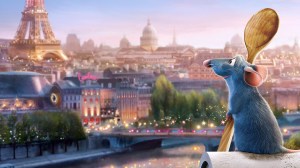
I am a great lover of rats in literature. Templeton in Charlotte’s Web was one of my first introductions to the idea of a complex character. And how could you not love the rat in Ratatouille (though my kids were grossed out by him).

There was Ratty in The Wind in the Willows, Cluny the Scourge in Redwall…the list goes on. Rats are apparently smart and clean. They’re social and apparently mate like maniacs (a litter of up to 10 pups every three weeks). When viewed from certain angles, from a distance, they are almost endearing.

In literature, they tend to be smart, and ultimately good-hearted. In most cases they are misunderstood. I would be willing to embrace them in all their rat-ness, especially this year, the Year of the Rat (ironically with all the plague associations rats inspire) if we were not inundated by them. At least I think.

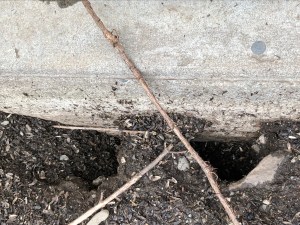
There is definitely a den next to our house (I see his/her face popping through the hole occasionally) and I suspect the half dozen similar holes around our barns are also not-so-subtle entryways. Why now? Granted, they tend to be under bird feeders, but the bird feeders have been there for ten years.

Our infestations tend to come in waves. A few years ago, there were skunks everywhere. An entire skunk family came out one evening to watch us play badminton. One skunk ambled towards us, with seemingly no malice (or rabies), and watched us flee into the house. The groundhogs are always bad, but at their peak last year. Same with the red squirrels, who mostly seem to have decamped. It makes me wonder where they go. Is our place like a vacation rental, someplace to spend a season before moving on? In any case, I hope the rats go soon.

Empty Nests

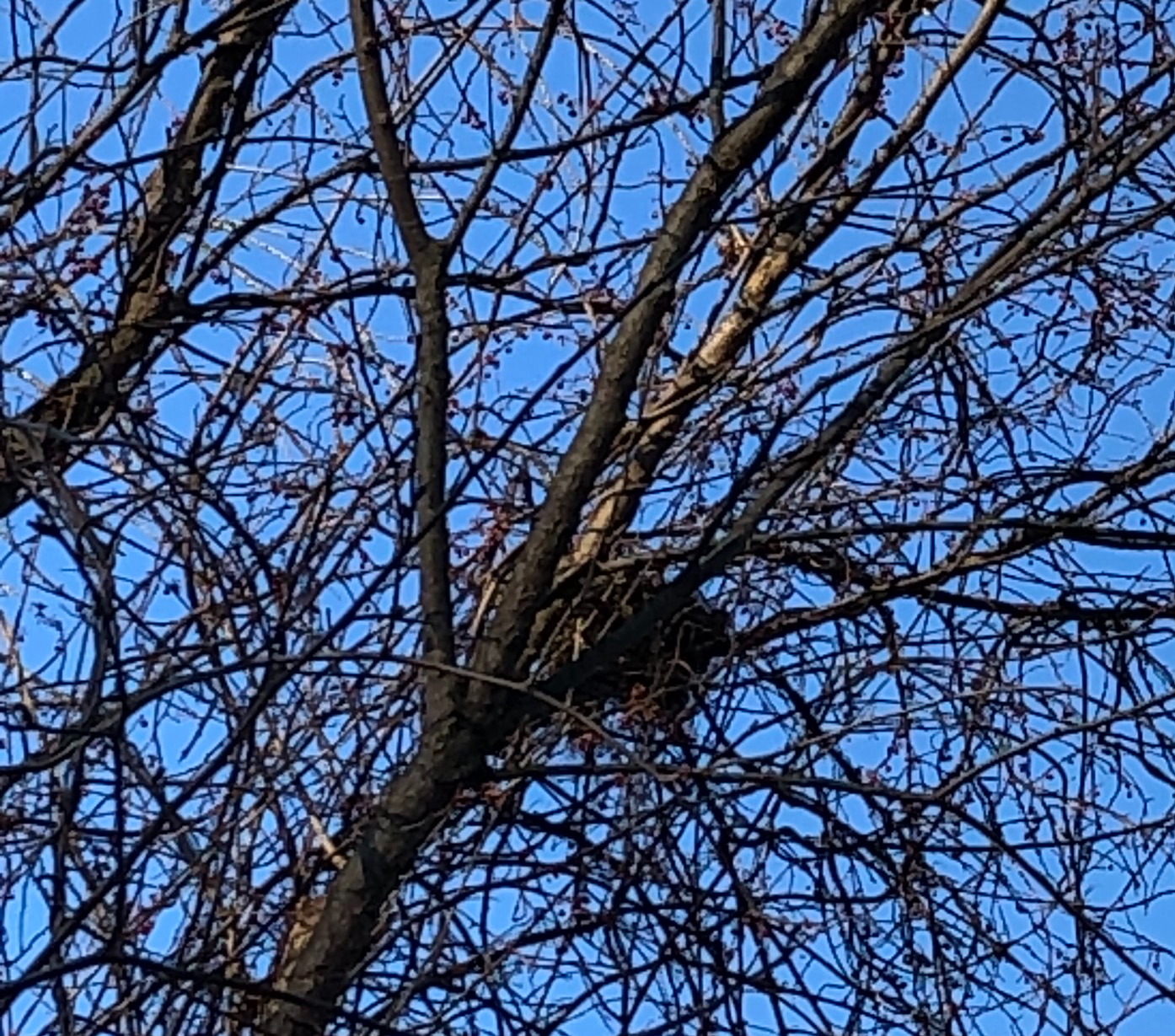
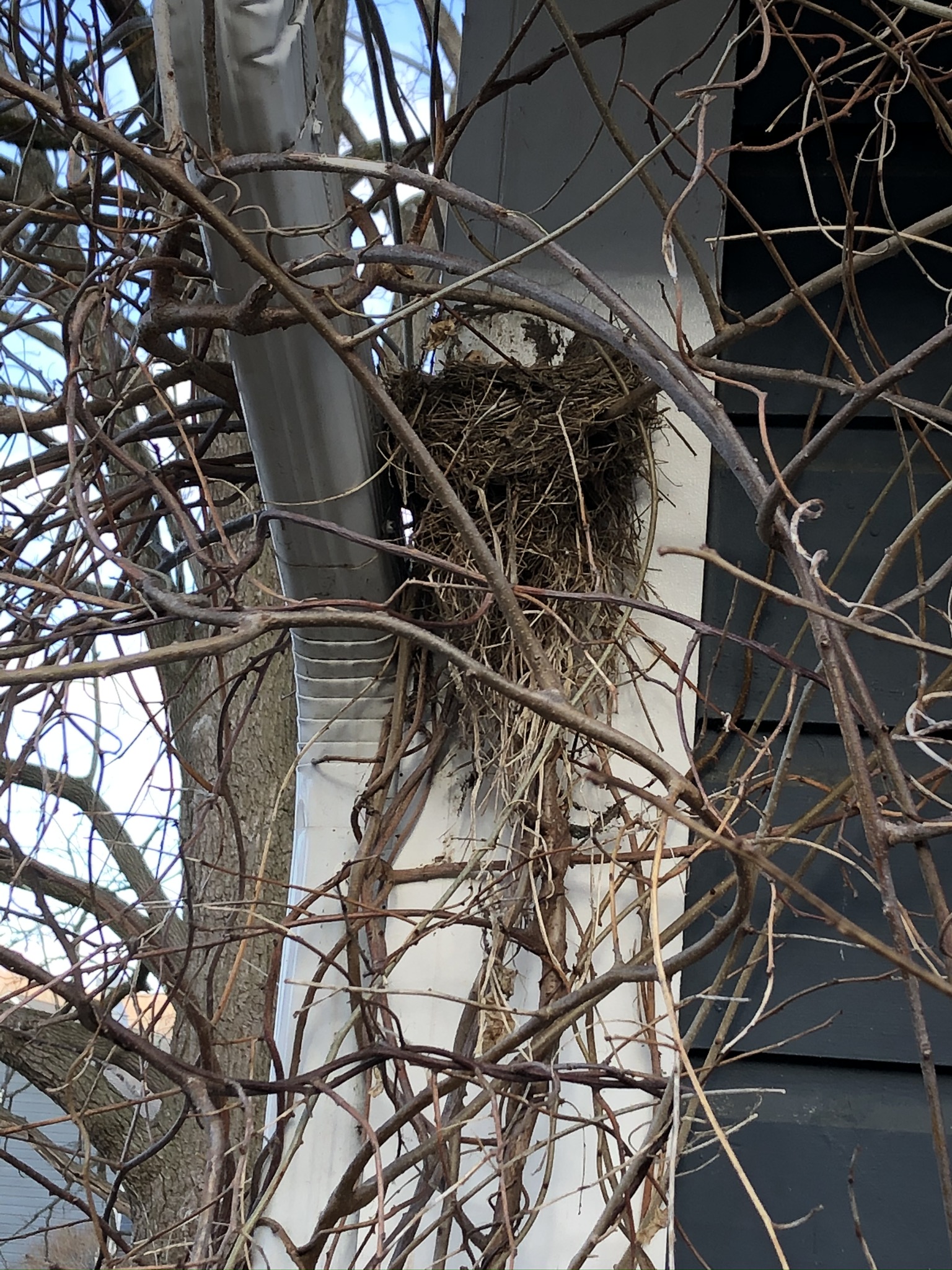
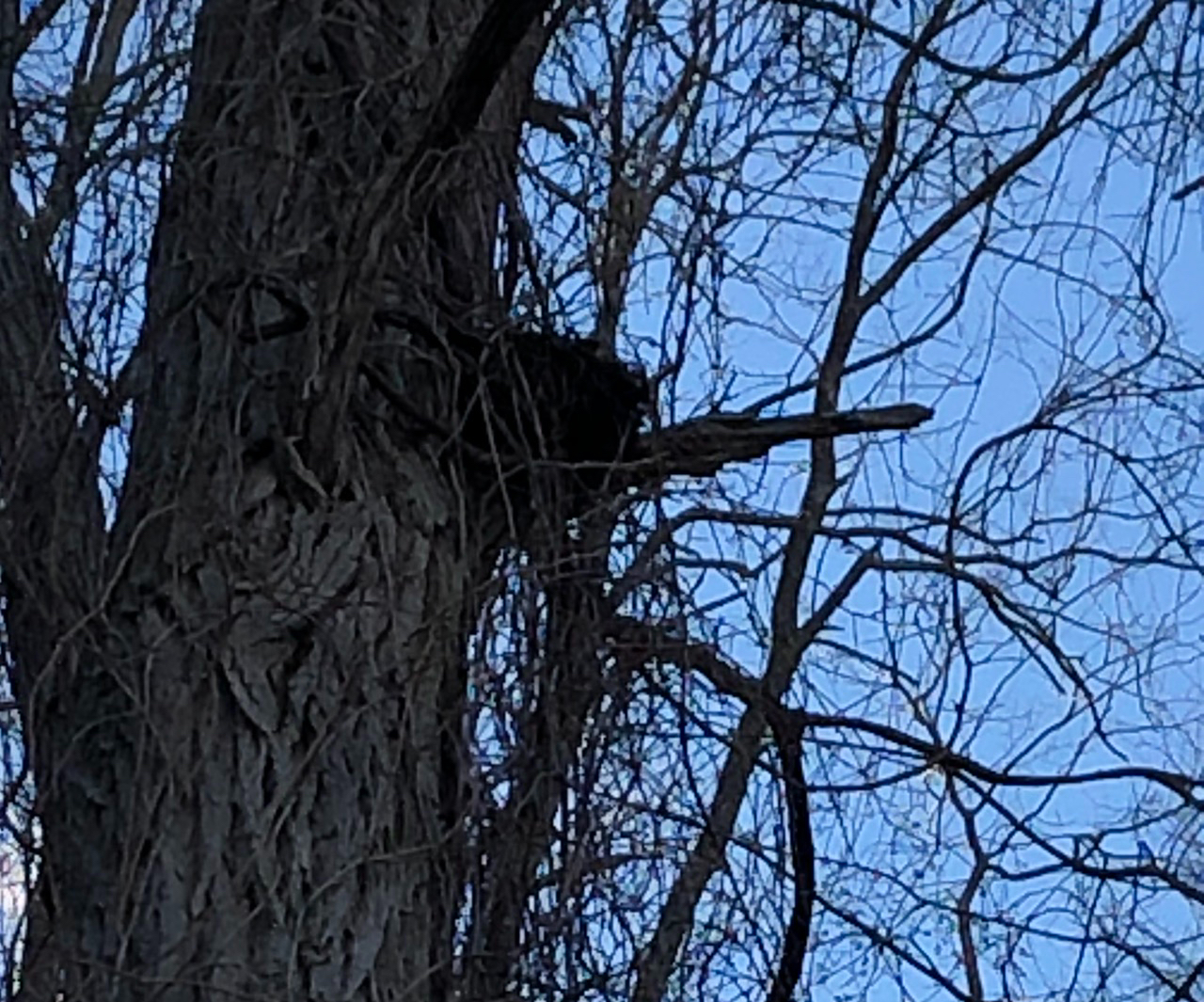
With the temperatures rising and with outside as the safest place to be, I’ve decided to expand the morning walks and take up a challenge posed in The Art of Noticing, by Rob Walker. Every morning a new way to pay attention. This morning — nests.

There are a ton of them (many too far away for my phone’s camera to do justice to). It reminded me to put out colored string in small pieces around the house, something I’ve done for a few years and occasionally am rewarded by spotting some put to use later in the summer or fall.

I cannot pass up a fallen nest, and collect them in an outbuilding. They rarely last long, as the mice put them to good use in their own nests.

Day after day after day after…

When you take a step back and think about time as a concept, it’s pretty bizarre. Maybe not so much time as the way we categorize it and feel as if we’ve got a hold of it by chopping it up into manageable pieces (days, months, years).

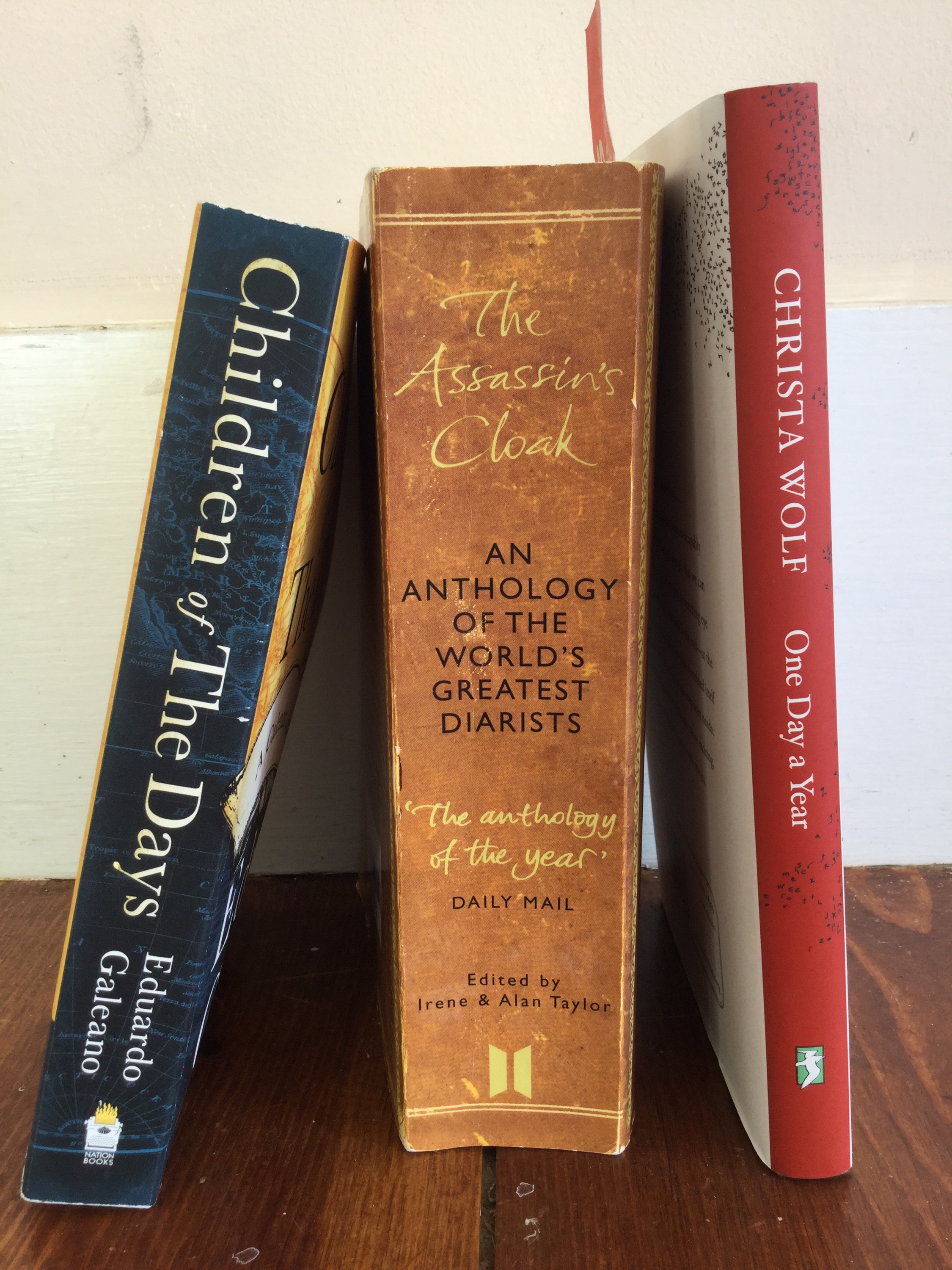
I’ve been thinking a lot since I came across The Assassin’s Cloak, a fantastic anthology of great diary entries categorized by day of the year. On January 5th, for example, Lord Byron wrote about his hangover in 1821, Virginia Woolf recorded a trip to Kingston in 1918, in 1940, Josef Goebbels gloated about the uproar over the Germans’ English radio broadcasts in London and, in 1978, Andy Warhol wondered about Bianca Jagger’s pimples and whether they were caused by depression over Mick.

Less dishy and more surface-skimming is The Children of Days by Eduardo Galeano. Every day highlights an event or person or historical term. May 8th describes the origins of the Tasmanian Devil (which will not endear you to the British Empire) and September 22nd imagines what a car-free day would be like.

Another very different but equally interesting take on time is in Christa Wolf’s One Day a Year. Asked in an interview what she’d done on a specific day, Wolf decided to record what she did on that day (September 27th) every year. For more than fifty years she wrote an entry on that day, and her insights about live in Berlin and international events are fascinating and timeless.