Fictional Simplicity

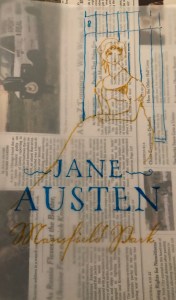
I would love to conduct a scientific experiment in which one version of my brain read contemporary fiction while another read an old classic, a Jane Austen novel for example, and I could sit back and compare their experiences.

I’m about halfway through Gary Shteyngart’s fantastically funny beautifully written new novel, Our Country Friends. It is entertaining and theoretically immersive and yet I can’t seem to read more than a chapter or two without drifting…(did I pay my credit card bill? I forgot to sign my kid’s sports consent form! Is it cold in here?). Not that this isn’t a fairly common experience in my life, but here’s the strange thing: Last month I re-read Mansfield Park and I sunk into it like a warm bath and came out only when I was relaxed and slightly shriveled.

So I’m wondering if there is a connection. Not in the prose so much as the world it portrays. Shteyngart’s novel is literally of the moment, full of phones, Covid, helicopter parenting and ambitious neurotic people. In Austen, a long walk could be the highlight of the day. News arrives so sporadically that each new snippet can be chewed over for days before the next one arrives.

Think of all the things we need to remember today: Passwords, who to call when the heat doesn’t work. Is it oil? Propane? How to unclog a drain, pay bills, pay taxes. Directions to the dentist, all the various doctor appointments and what your health care plan will cover. Which former republic is Russia planning to invade? What horrible things are the Chinese government doing now, without repercussions? That’s without touching on the latest music, movies, tv shows and whether or not I even subscribe to the service which will allow me to watch them.

Maybe it’s age catching up with me, this desire to downscale the input. My brain is fed up and its way of telling me is to cut me off after a chapter of the latest fiction. It’s telling me that I really should be living in a time when I could spend an entire morning hand-washing the underwear I’ve probably been wearing for days at a time. Gross? Yes. But so much less stressful!

My Life in Poetry

Lately, in an effort to not think about politics and the state of things, at least in the morning, I’ve taken to listening to the poetry podcast, The Slowdown, hosted by Ada Limon. It’s not a new show — for awhile it was hosted by Tracy K. Smith — but for whatever reason it has recently pulled me in to the point where it is nearly as essential as coffee.

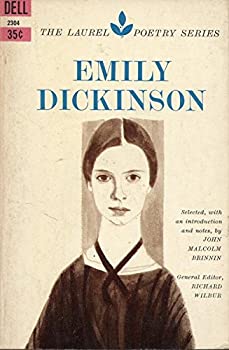
The format is simple: Ada Limon picks a poem and introduces it with a short essay. The poems are invariably great, but it is the essays that pull me in and I am always a little (embarrassingly) disappointed when she shifts from talking to reciting. It got me thinking about poetry in my life. I want to love it much more than I actually do. I have shelves of books from Wordsworth to Rilke to Adrienne Rich to Billy Collins to Ada Limon and Tracy K. Smith. I read it often, but it does not seep into my bones the way I want it to. My mind wanders. Maybe I’m just too impatient, always looking for plot. I assumed I was always that way.

Recently though, I found a box of books from my childhood home. There was some James Michener, some Vonnegut, a stack of books from my high school class on dystopian literature which now seems quite relevant. There was also a lot of poetry. And here’s the thing: the books were dog-eared, underlined; there were notes in the margins and stars next to the titles I loved best. I had circled words I loved.

What happened? It is as if poetry was a youthful dalliance and now we broke up, or at least settled into a more cordial relationship. I’ve grown out of a lot of bad habits — thumb-sucking, using pretentious words in an effort to impress people, collecting baseball hats. Did I grow out of poetry?

I can only hope that I somehow cycle back to it. That someday soon I crave it again, a craving more along the lines of sweets than the vegetables my body knows are good for it.

Old Book, New Book

Rodger’s Book Barn, Hillsdale NY

I have not always been such a great reader. For most of my adolescence and (embarrassingly), well into my twenties, I read…non-challenging books. I remember showing one old boyfriend, a real reader, the book I had just bought. His eyes popped at the bright pink cover. “Sweetie Baby Cookie Honey?” he read. I could see him re-evaluating our entire relationship (and in retrospect he should have!)

A few years later, I bought my first hardcover (Spartina, by John Casey, for no reason I can remember now) and it sat in a prominent, GROWN UP, spot on my bookshelf. Then I got a job at Shakespeare & Company and set myself on a new trajectory, one of hoarding and obsession, one in which our house has bookshelves in nearly every room and before an upcoming renovation, I had to ward off a panic attack at the prospect of losing one of the larger shelves.

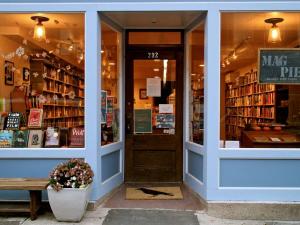
Magpie Books, Catskill NY

As my buying habits continue unabated, I have noticed a shift in how I shop. In the early days of the internet, I was getting constant deliveries (while continuing to patronize my local stores). Lately though, I don’t shop online. I window shop, but somehow the ability to buy anything I want whenever I wanted took the thrill out of it. It reminded me of when my brother used to collect coins and got a manic look in his eye when he stumbled across a new one.

We are lucky enough to have not one but three fantastic used bookstores within a forty-five minute drive of our house. This has always felt like a gluttony of riches, but then it only got better last weekend, when we discovered the seasonal barn next door to one of them.

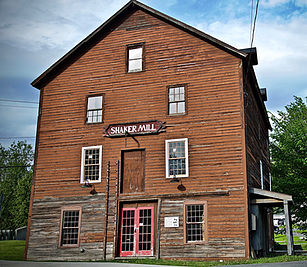
Shaker Mill Books, West Stockbridge, Mass

Shaker Mill Books in West Stockbridge is, in all seasons, a really good store with a great selection of used books and some new. The owner, Eric Wilska, is clearly an obsessive in the best sense of the word. In the winter, the enormous barn next door to the shop is a place to store inventory, but in the summer he opens it up to the public. It’s like nothing else. It’s full of book art (shelves and pillars and furniture constructed entirely from books, a dress made of pages of an encyclopedia) and incredible books you never knew existed (or imagined could exist): magnum size limited edition books which accompanied exhibits, including a David Hockney (signed by Hockney) and a Rolling Stones book full of candid pictures and signed by every member of the band. Wilska himself is extremely friendly and happy to offer background on some of the more surprising features of the store.

I’ve been thinking about why I’m gravitating to used bookstores, and will write about it later. But first I have to do some more research.

Birds on the Brain

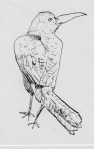
Yesterday I sat for a good half hour on the ground underneath a bluebird which was conversing deeply with another bluebird some distance away. I had no idea what it was saying (hopefully “Let’s move into one of the birdhouses the humans put up last weekend”). It was one of the best parts of my day.

Since Covid, bird watching has become a “thing.” At my local bookstore, recent releases about bird behavior (David Allen Sibley’s What It’s Like to Be a Bird; The Bird Way, by Jennifer Ackerman) were backordered for weeks. Apparently podcasters stalked Jenny Odell, author of the altogether fantastic How to Be Alone, which is filled with her bird obsessions because my feed was filled with interviews with her.

I say this not out of complaint but a certain camaraderie. My bird obsession started a few years ago, but before I moved to the country I tended to put birds into categories such as “brown bird” or “duck.” In New York City, a nesting pair of red-tailed hawks held the city in thrall; now I regularly wave red-tailed hawks way from our chickens.

We’ve set up bird feeders around our house, with the result that our place is teeming with different species. This time of year the chickadees, nuthatches, titmouse and cardinals are joined by red-winged blackbirds, Carolina wrens, finches and sparrows galore. Sometimes I will sit and watch them interact, anthropomorphizing them to a degree which would make scientists roll their eyes. The bully bluejays, delicate titmouse, low-profile juncos. I could write the avian version of a high school drama series.

The thing is, they are amazing. Crows recognize individual humans and if you piss them off (bother one or cause them some harm), they might attack you; on the other hand, leave them presents and they might reward you with a gift. Birds’ migration paths follow the Earth’s magnetic field, something humans cannot even detect.

We could all do worse than develop an obsession. As I write this, two finches are at my feeder taking turns feeding each other while a red-bellied woodpecker is at the other feed methodically spilling sunflower seeds on the ground and two female cardinals are bickering. It is, at the very least, an excellent procrastination device.

The Writer and Her/His Thoughts

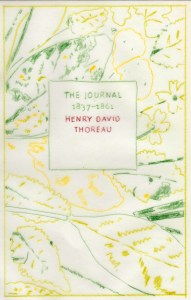
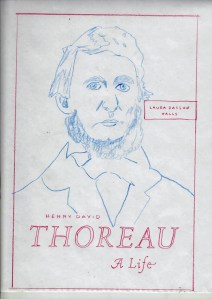
For the last several months, I’ve been doing a deep dive into Thoreau, alternating the Journal with Laura Dassow’s excellent biography. It’s a hefty project, since both are fat books, and now, nearly finished, I might be nothing close to a Thoreau scholar, but I know the man as more than a guy who lived by a pond for awhile.

I am only slightly embarrassed to admit that while baking in Thoreau’s ideas and hijinks (he climbed a tree and caught an owl in his bare hands — and later released it; in order to understand geese better he would sometimes flap his arms and honk like them), I frequently irritated my family with stories (“Did you know that Thoreau’s home was a stop on the Underground Railroad? That he was one of the first and most vocal supporters of John Brown?). My daughter would groan and say “Thoreau — again?” though she’d pronounce it “throw” as if she wanted to throw me across the room.

Reading them both together — I would focus on several years of the journal followed by the corresponding chapter of the biography — has given me an even deeper appreciation of how humble the guy was. His neighbors bemoaned his lack of ambition (one made fun of him for standing by a pond for hours observing frogs), they failed to notice that he was also lecturing, building houses, making crucial observations about levels of the river and its flow, surveying property and, oh yes, writing several books and magazine articles. He did all those things yet there was little mention in his diary, which instead was filled with pages and pages of birds and frogs and meticulous descriptions of plants, all of which sounds very boring, but absolutely was not, as he tied all that observation into the relationship between man and the natural world and to what it means to live a good life.

In my twenties I once tried to tackle John Cheever’s short stories alongside his journals. I was far too young and narcissistic to understand the struggles of an older man. Now might be the time to go back to it, though my interests have changed and I’m more attuned to the world of a nineteenth century nature lover than a twentieth century suburban writer, no matter how brilliant his stories.

Still, I might give it a shot. Along with Dawn Powell, Katherine Mansfield, Virginia Woolf….a new reading project.

Forever Young

A year into my self-directed immersion course on Thoreau, I still find, almost daily, some observation or thought that resonates. Many I wish I’d read (and actually heeded — two different things) in my twenties. Like all of us, he is trying to find out how to be in the world. He points out that the “real jobs” held by neighbors would drive him bananas, and despite days filled with hard work and observation he is constantly fighting off accusations (often from friends like Emerson) that he is lazy. Take it from me, lying on the couch on a sunny cold afternoon, he was nothing close to lazy.

He worked in the pencil factory, he helped neighbors raise houses, he kept this incredibly meticulous journal filled with scientific observations, he wrote many books, he lectured on many things, including abolition, his house was a stop on the Underground Railroad. And, one of my favorite things about him, he played. Constantly. In some ways like a kid. He would ice skate for hours at a time, he climbed trees (well into his 30s). In one tree, he caught an owl in his bare hands (and later let it go), he found dragged snapping turtles home (at great risk to his fingers and toes) to observe them and dug up turtle eggs then buried them outside his house so he would watch them hatch.

Having read a number of books written by great observers of the natural world, I’ve noticed many have this sense of almost childlike wonder and adventure in common. In Vesper Flights, Helen MacDonald finds meaning in birds and trees and takes cues from the natural world on how to live. she talks about hunting for mushrooms:

“Searching for chanterelles, I’ve found myself unconsciously walking on tiptoe across mossy stumps, as if they might hear me coming. It doesn’t work well if you walk around and try to spot them directly. They have an uncanny ability to hide from the searching eye. Instead, you have to alter the way you regard the ground around you, concern yourself with the strange phenomenology of leaf litter and try to give equal attention to all colors, shapes and angles on the messy forest floor.” 

Vesper Flights

In his book, The Stars in Our Pockets, Howard Axelrod says, “Attention span isn’t a matter of willpower, or even necessarily of intellect. Attention span comes from curiosity” and goes on to praise the sort of curiosity that “carries you branch to branch.”

I don’t know why it surprised me so much to think about Thoreau climbing trees or skating on the frozen rivers. Maybe I think of him, and everyone from that time period, as sort of old and fusty and missing a sense of whimsy. So it’s strange to think that this is something he could actually teach those of us who are too preoccupied to find some joy in shimmying up a tree and observing a turtle.

Reading Blind: A Test Case

When reading a book — any book (or by that means any printed matter) — I am by nature someone who devours the inner and outer flap, the blurbs, and the author bio fifteen times, sometimes interrupting a chapter to flip back and see if the author really has three kids and dedicated the book to her pet guinea pig. It’s a tic and a horrible habit which not only yanks me out of the story, it pulls me towards opinions that have nothing to do with my experience with the book (ie. “Oh right, The NYT loved it” or “Ooh, so the back says the protagonist is going to get lost…” or “I wonder if she and her Brooklyn-living family live in a brownstone or one of those converted lofts”).

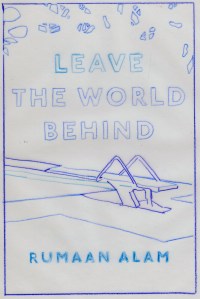
One of the many vague floating reading resolutions I made this year was to do my best to knock it off. Read the damn book. My test case was the contemporary novel, Leave the World Behind, by Rumaan Alam. I didn’t read the reviews; my husband read it but I forbade him to utter a syllable until I was finished, I removed and hid the dust jacket. I even switched off a radio interview before the introductions were completed.

And I’m so glad I did because the whole thing was a huge surprise. When (white) Amanda and Clay and their kids are interrupted on their Long Island vacation home on the second night by the (Black) owners of the rental house, I did not know what was in store. Would there be a fight? Would the police be involved? Would the Proud Boys show up? What sort of book was this? In order not to ruin someone else’s experience, I am not going to answer that. I will say that it hooked me. The writing is vivid and skillful and I’m always game for poking fun at Brooklynites.

There were several things I didn’t like about the book. Primarily, I didn’t care about the characters…not because they were smug and consumerist, since smug and consumerist people are people too, or that I didn’t like them, since I’m a sucker for an unlikeable character, but that they were flat. I didn’t understand what made them operate. And because the plot was so compelling, I didn’t care. I noticed, but it wasn’t until I was done and could think about the whole package that it bothered me.

In retrospect, is that a good thing? Will I become a slave to plot and ignore other important ingredients of a story? Maybe, but there is also the idea that it’s more fair to the author, giving the story a chance to have its say before the greek chorus kicks in.