How Yiyun Li Snuck Up on Me

I’ve been reading Yiyun Li’s stories in The New Yorker for years. I often listen to them, read by the author in her sweet, soft voice. And I’ve always liked them well enough.

Then, in the early days of the pandemic, when I sat on the front porch with a broken ankle and nowhere to go, nothing to do, I decided to join her Tolstoy Together deep dive into War and Peace. I had never particularly aspired to read War and Peace; of the Russians, I was more partial to Chekhov. But wow. Following her daily suggested allotment, enchanted by her comments and her enthusiasm, I not only read the whole thing, I devoured it. Two packages of color-coded post-its now adorn the pages.

The experience was so joyful that I began to read Yiyun Li’s work more attentively. I look forward to her New Yorker stories and when one shows up, like this week, it’s like biblio-Christmas.

“Hello, Goodbye” is a particularly good one. It has an Alice Munro flavor to it, of a long span of time compressed, of entire lives lived in the span of a few pages. When I read and fall in love with these stories, a part of me hopes that they are excerpts from novels. The other part is so happy to have spent time admiring all the facets of this little jewel.

Two Views of Mrs. Thatcher

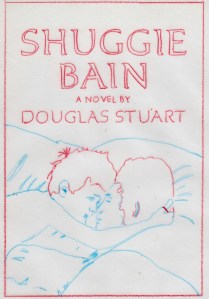
Recently, I caught up with the latest season of The Crown while simultaneously reading Shuggie Bain. Both are excellent and each gives a different perspective (obviously!) on Margaret Thatcher and her deeply reviled economic austerity. In The Crown, as played by Gillian Anderson (whose stiff voice and crooked, purse-slung arm will forever be my vision the Prime Minister), Thatcher is tough but human, a woman interloper in a man’s world. She was, amazingly, sympathetic.

Thatcher never appears directly in Shuggie Bain, but Thatcherism is omnipresent, as it must have been throughout England during that time period. The poverty, the alcoholism, the despair, the crappy housing projects. As she would have said, people need to pull themselves up by their bootstraps. But what if you have no boots?

This is an excellent book to read if you want that bootless experience. The poverty and the despair is palpable — the characters are so well-drawn, the details so immediate — but there is a lightness to the prose. Also, in a book like this it’s so easy to create victims and villains. Douglas Stuart doesn’t do that. Even Shuggie’s father, Shug, is three dimensional and almost sympathetic. Though maybe not in one of my favorite quotes from the book:

“Shug picked up his money belt and kissed her with a forceful tongue. He had to squeeze all the small bones in her hands to get her to release him. She had loved him, and he had needed to break her completely to leave her for good. Agnes Bain was too rare a thing to let someone else love. It wouldn’t do to leave pieces of her for another man to collect and repair later.” 

Thoreau and Character

The angle intersections inscribed by our daily experiences, the coves and inlets of our lives, will ground the decisions we make, our actions in the world. And the sum total of all our moral actions combined will constitute the ethical character of the society we build together.

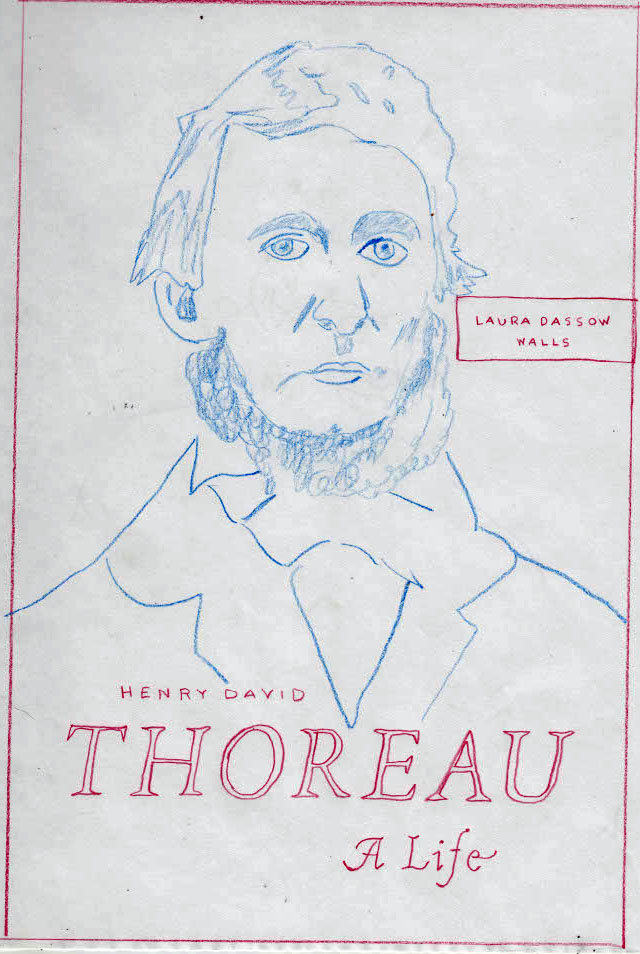
Hopping back and forth between Thoreau’s (excellent) biography and his journals is an education not just in the life of a decidedly quirky man, but also the rapid and disturbing settlement of the country. When he first discovered the pond it was wild and largely isolated; by the time he built his cabin, the train was passing by and there were settlements left behind by the Irish workers who built worked on the railroads. Surprisingly though, despite his deep connection with nature (rumor had it he befriended crows and squirrels and could summon a woodchuck by whistling), he was not opposed to development if it furthered the human condition.